

You replay conversations. You question your decisions. You try to “solve” thoughts that don’t seem to have clear answers. And no matter how much reassurance you seek, the relief never lasts.
If this feels familiar, you may be caught in the cycle of obsessive thinking—a pattern that can quietly take over your emotional life and strain your relationships.
For many adults between 35–60, this experience can feel confusing and exhausting. You may appear composed on the outside while internally battling constant mental noise. The good news is that mental health wellness and expert OCD therapy in Arizona can help you break free from this cycle.
At BrainBody OCD Counseling, we specialize in helping individuals understand and manage obsessive thinking with evidence-based care.
What Is the Cycle of Obsessive Thinking?
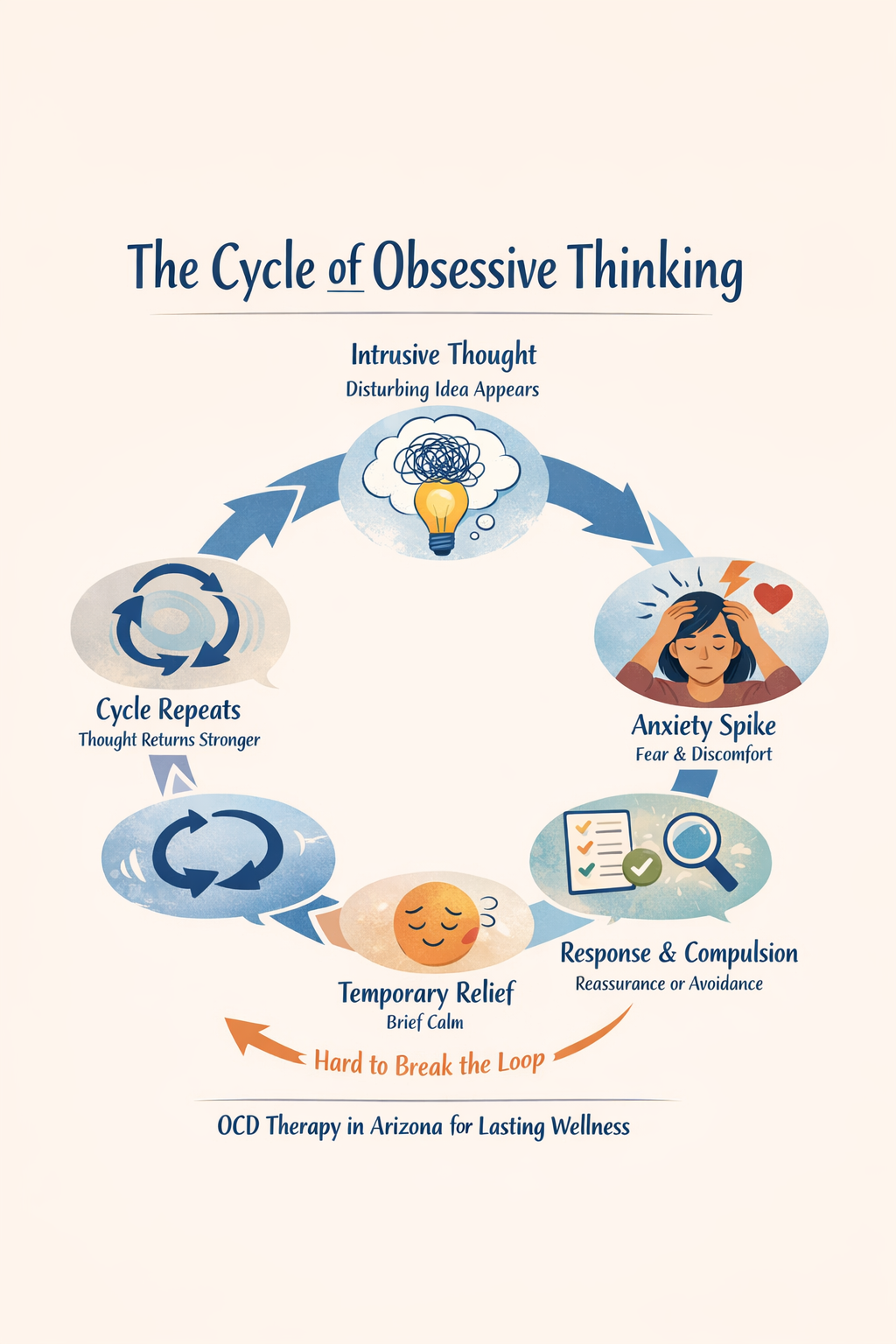
Obsessive thinking is more than just overthinking. It’s a repetitive loop of intrusive thoughts that feel urgent, distressing, and difficult to control.
The Cycle Often Looks Like This:
Intrusive Thought: A distressing or unwanted idea appears
Anxiety Spike: You feel fear, doubt, or discomfort
Mental or Behavioral Response: You analyze, seek reassurance, or avoid triggers
Temporary Relief: Anxiety decreases briefly
Cycle Repeats: The thought returns—often stronger
Over time, this loop reinforces itself, making it harder to break without support.
This is where expert OCD therapy in Arizona becomes essential—not just for symptom relief, but for long-term mental health wellness.
How Obsessive Thinking Impacts Relationships

Obsessive thoughts don’t just stay in your head—they often spill into your relationships in subtle but powerful ways.
Constant Reassurance Seeking
You may frequently ask loved ones for validation or certainty, which can create tension over time.
Emotional Distance
Mental preoccupation can make it harder to stay present, leading to disconnection from partners, family, or friends.
Irritability and Frustration
The internal stress of obsessive thinking can show up as impatience or mood swings.
Fear of Making the “Wrong” Choice
Decision-making becomes overwhelming, which can affect everything from small daily choices to major life decisions.
Without proper support, these patterns can strain even the strongest relationships. Prioritizing mental health wellness and expert OCD therapy in Arizona can help restore connection and clarity.
The Hidden Toll on Emotional Wellness
Obsessive thinking doesn’t just affect your thoughts—it impacts your entire emotional experience.
You might notice:
Persistent anxiety or unease
Difficulty relaxing or “switching off”
Sleep disturbances
Feelings of guilt or self-doubt
Mental exhaustion from constant analysis
Over time, this can lead to burnout and a reduced quality of life.
The goal of mental health wellness and expert OCD therapy in Arizona is not to eliminate thoughts—but to change how you respond to them.
Why Willpower Alone Doesn’t Break the Cycle
Many people try to “think their way out” of obsessive thoughts—but this often makes the cycle stronger.
That’s because obsessive thinking is not a lack of logic or discipline—it’s a learned pattern in the brain.
What Actually Helps: Evidence-Based OCD Therapy
At BrainBody OCD Counseling, we use proven approaches designed specifically for OCD, including:
Exposure and Response Prevention (ERP): Helps you face fears without engaging in compulsions
Cognitive Behavioral Therapy (CBT): Teaches healthier thinking patterns
Mindfulness-Based Strategies: Builds awareness without judgment
These approaches are highly effective in improving mental health wellness and expert OCD therapy in Arizona.

Rebuilding Relationships Through Healing
As you begin to break the cycle of obsessive thinking, your relationships can start to shift in meaningful ways.
You may experience:
Less need for reassurance
Improved communication
Greater emotional presence
Increased confidence in your decisions
Healing isn’t just internal—it’s relational. And with the right support, meaningful change is possible.
Why Choose BrainBody OCD Counseling in Arizona
At BrainBody OCD Counseling, we understand how isolating obsessive thinking can feel—especially when others may not fully understand what you’re going through.
Our approach to mental health wellness and expert OCD therapy in Arizona includes:
Specialized care for OCD and anxiety-related conditions
Compassionate, non-judgmental support
Personalized treatment plans tailored to your needs
Evidence-based methods like ERP and CBT
A focus on long-term healing—not just short-term relief
You don’t have to navigate this alone.
Breaking the Cycle Starts With One Step
Obsessive thinking can make you feel stuck—but you are not stuck. With the right tools and guidance, it is possible to change your relationship with your thoughts and reclaim your emotional well-being.
If you’re ready to prioritize your mental health wellness and explore expert OCD therapy in Arizona, BrainBody OCD Counseling is here to help.
Schedule Appointment
FAQs About OCD Therapy and Mental Health Wellness in Arizona
1. What is obsessive thinking in OCD?
Obsessive thinking involves intrusive, repetitive thoughts that cause anxiety and are difficult to control.
2. How does OCD therapy help break the cycle?
Expert OCD therapy in Arizona, such as ERP and CBT, helps you respond differently to thoughts, reducing their impact over time.
3. Can obsessive thinking affect relationships?
Yes, it can lead to reassurance-seeking, emotional distance, and communication challenges.
4. Is OCD therapy effective for adults?
Absolutely. Many adults experience significant improvement with specialized OCD treatment.
5. How do I get started with OCD therapy in Arizona?
You can visit brainbodyocdcounseling.com to learn more and schedule an appointment with a qualified therapist.