
You’re scrolling through your day, and suddenly a simple thought—like crossing a busy street, opening an email, or stepping into a social gathering—makes your heart race. It’s not just nervousness; it’s a physical, mental, and emotional reaction that can feel impossible to control. For adults navigating life in Arizona, phobias and general anxiety aren’t just “stress”—they can quietly dictate choices, limit opportunities, and even strain relationships.
If you’ve ever avoided something you wanted to do, replayed fears in your mind, or felt trapped by worry, you’re not alone. At BrainBody OCD Counseling, we help you understand these experiences, differentiate between phobias and general anxiety, and find practical, evidence-based tools to reclaim your life.
The Heart of the Matter: What Are Phobias Versus General Anxiety?
Phobias: More Than Just Being “Afraid”
A phobia is an intense, persistent fear of a specific object, situation, or activity. Unlike everyday fear, phobias can trigger:
Immediate and overwhelming distress
Avoidance behaviors that disrupt daily life
Physical responses (shaking, nausea, rapid heartbeat)
Anxiety that isn’t easily soothed by rational thinking
Examples include fear of heights, spiders, flying, or public speaking. While nearly everyone may feel nervous in these situations, people with phobias experience reactions that interfere with their quality of life.
General Anxiety: Persistent Worry Across Situations
General Anxiety, on the other hand, isn’t tied to just one trigger. It often presents as:
Chronic worry about everyday events
Restlessness or irritability
Difficulty concentrating or sleeping
Tension that fluctuates but rarely goes away fully
Unlike phobias, general anxiety doesn’t require a specific fear object—it’s a broader emotional state that can affect relationships, work, and overall wellbeing.
Key Differences You Should Know
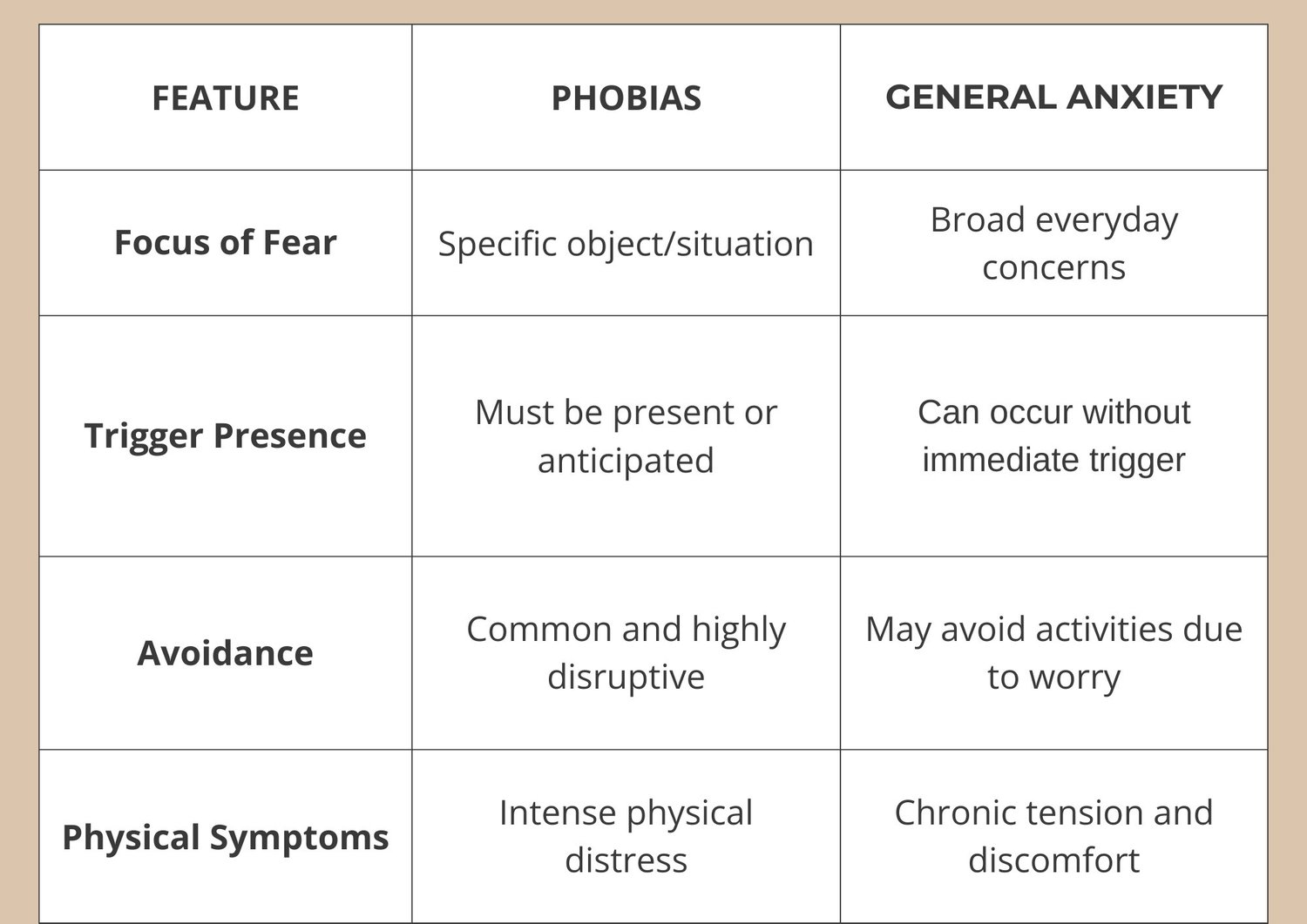
Understanding these differences matters because treatment approaches vary, and identifying the root cause of distress helps you find better therapy for phobia and anxiety in Arizona that fits your journey.
Why This Distinction Shapes Your Path to Mental Wellness
You Deserve Tailored Support
Mental health isn’t one-size-fits-all. Someone with a specific phobia may benefit most from exposure-based therapy or behavioral techniques that gradually reduce fear responses. Meanwhile, someone dealing with general anxiety might find relief through cognitive restructuring, stress management, mindfulness, or talk therapy.
At BrainBody OCD Counseling, we design treatment plans based on your unique experiences—whether it’s phobia, anxiety, or OCD-related fears—which leads to more sustainable outcomes.
Clarity Reduces Self‑Judgment
Not knowing what you’re facing can increase shame, confusion, or avoidance. Learning how phobias differ from general anxiety helps you:
Understand your reactions as real and treatable
Clarify which therapy style might help you most
Build confidence that healing is possible
What Therapy for Phobia and Anxiety in Arizona Looks Like
Trauma‑Informed, Evidence‑Based Care
Our counseling team blends compassionate understanding with approaches grounded in science, including:
Cognitive Behavioral Therapy (CBT) — reshapes unhelpful thoughts
Exposure Therapy — gently reduces fear responses
Mindfulness and Relaxation Skills — supports emotional regulation
Psychotherapy for Underlying Patterns — builds long‑term resilience
Therapy isn’t just about “fixing” a fear—it’s about reclaiming your life with confidence, calm, and purpose.
Support That Meets You Where You Are
Whether you prefer in‑person sessions in Arizona or online appointments, our clinicians are trained to meet you where you feel safest. We’re focused on your pace, your comfort, and your long‑term wellbeing.
Real Stories, Real Change

At BrainBody OCD Counseling we’ve worked with adults who:
Avoided elevators for years due to intense fear
Struggled with endless worry that kept them up at night
Felt misunderstood by friends and family
Wondered if therapy could actually help
And today, many of them report:
Greater confidence in challenging situations
Fewer panic reactions
Improved relationships and daily functioning
A renewed sense of control over their mental health
Your story matters—and so does your healing.
Take the Next Step Toward Mental Health Wellness
If you’ve ever asked:
“Why can’t I just stop worrying?”
“Is this fear normal?”
“What kind of therapy helps someone like me?”
…then it’s time to reach out.
BrainBody OCD Counseling specializes in guiding adults through the maze of fear, anxiety, phobia, and emotional distress. With expert care tailored to your life in Arizona, you’ll gain clarity, confidence, and tools to thrive—not just survive.
Explore therapy for phobia and anxiety and start your healing today.
Frequently Asked Questions
Q: Can someone with a phobia also have general anxiety?
Yes—phobias and general anxiety can co‑occur. Many people experience a specific fear while also dealing with broader worry and stress. A tailored assessment helps identify the right approach.
Q: How long does therapy for phobia and anxiety typically take?
There’s no fixed timeline. Some people feel meaningful relief in a few months, while others take longer. The most important factor is consistency and support from a trained clinician.
Q: Is medication necessary for phobias or anxiety?
Medication isn’t always required. Many people benefit significantly from therapy alone, though some do choose medication in consultation with a psychiatrist or physician.
Q: How do I know if I need therapy?
If fear or worry limits your everyday activities, causes distress, or interferes with work or relationships, therapy is a valuable step toward wellness.